- Some items are prohibited: you can’t bring or import these into New Zealand.
- Some items are restricted: you need approval to import or export these items.
- You may not be able to bring some medicines or controlled drugs into New Zealand.
What you need to know
Prohibited and restricted items
To protect our people, environment, and economy, some goods:
- require a permit
- must be declared
- aren’t allowed into the country at all.
Here you’ll find information on the rules for:
- medicines
- food, plants, animal products, and other risk items
- weapons
- commercial goods
- other items you might be travelling with.
What prohibited means
Prohibited items are not allowed into New Zealand under any circumstances. These items pose a significant risk to our biosecurity, public health, or national security.
You must declare any prohibited items when you arrive in New Zealand.
Bringing in prohibited items is a serious offence and can lead to your arrest.
What restricted means
You need a permit or an exemption to bring these items into New Zealand.
Specific rules for what you're bringing into New Zealand
Checking these requirements before you travel will help you:
- avoid delays
- ensure compliance with Customs and biosecurity regulations
- make your arrival as smooth as possible.
If in doubt, declare it!
Medicines
Prescription medicines and controlled drugs (medicines and drugs with strict regulations) have specific requirements. These must be declared on your New Zealand Traveller Declaration.
Prescription medicines
If you are arriving in New Zealand with prescription medicines (that do not contain controlled drugs), you must:
- bring a copy of your prescription, or a letter from your doctor confirming you are being treated with the medicine
- keep the medicine in its original packaging
- bring no more than three months of supply
- You may bring up to six months of supply if the medicine is an oral contraceptive.
When to declare prescription medicine
You must declare your prescription medicine if either of the following apply:
- you are carrying more than three months of supply
- the medicine is not prescribed to you or a family member.
Learn more about bringing medicines into New Zealand on Medsafe - this includes guidance on non-prescription medicines.
Controlled drugs - Declare
Controlled drugs are medicines or drugs with strict regulations. If you are arriving in New Zealand with controlled drugs, you must:
- declare the controlled drugs on your New Zealand Traveller Declaration
- keep the controlled drugs in their original packaging
- bring no more than one month of supply.
- bring either of the following:
- a copy of your prescription
- a letter from your doctor confirming both of these:
- you are being treated with the controlled drugs
- the name and strength of these drugs
All controlled drugs must be declared on your New Zealand Traveller Declaration.
Find out more about controlled drugs at Ministry of Health
Pseudoephedrine - Declare
All medicines containing pseudoephedrine are controlled drugs. If you are arriving in New Zealand with medicine containing pseudoephedrine, you must:
- follow all the controlled drugs declaration instructions
- keep the medicine with you in your hand luggage.
You cannot bring medicines with pseudoephedrine into New Zealand for friends or family.
Food, plants, animal products, and other risk items
Any pests or diseases that come in with your items could cause serious damage to New Zealand’s environment and economy.
On your arrival declaration, you must declare all risk items that you are carrying both in your hand luggage and in your checked-in bags.
Risk items - Declare
Risk items include:
- any food (fresh, dried, natural or packaged)
- any plants or seeds (alive, dried, natural or packaged)
- wooden items
- animals or animal products
- traditional/herbal medicines
- any shoes, sports or outdoor equipment you’ve used.
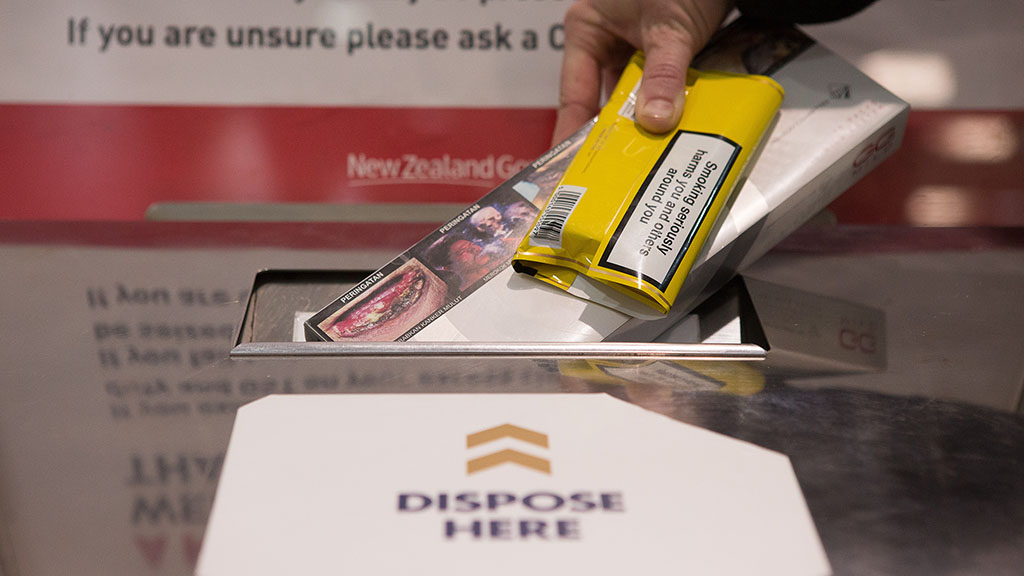
If you’re unsure, declare your items when you arrive for inspection, or put them in the marked amnesty bins. If you haven’t declared a risk item, you may get a fine or be prosecuted.
Item inspection
Ministry for Primary Industries (MPI) officers will inspect your items and determine if they can be returned to you, or if they are not permitted to enter New Zealand.
They may need to treat items to be able to return them to you. You will have to pay for this.
More information on food, plants, and other risk items
MPI's website can tell you more about what you need to do.
Radio devices
Some radio devices brought in from other countries can interfere with New Zealand's local radio, TV, or wireless communications.
Examples of radio devices - Prohibited
- Wireless Electronic Countermeasure (ECM) devices, such as mobile phone or GPS jammers
- some dog-tracking devices or collars
- unrestricted two-way radios
- UHF Citizens Band (CB) radios from the USA, UK and Europe
- some radio microphones.
More information is available at Radio Spectrum Management
Endangered species
Some plants and animals are protected under international law. This includes items made from endangered species.
You must not bring these items into New Zealand without the correct permits.
Endangered species items - Restricted
The endangered species items most commonly seized or surrendered at the New Zealand border include:
- Corals and clams
- Crocodile and alligator products (jerky and leather)
- American ginseng root and traditional medicines containing dendrobium and saussurea costus
You need a permit from the Department of Conservation to bring the items listed above into or out of New Zealand.
A permit is also required for the items below. Note that these are only some examples - this is not a complete list. If you have any doubts about whether your item requires a permit, contact the Department of Conservation at cites@doc.govt.nz for more information.
- Ivory and products made from ivory
- Animal skins, leather goods, or furs
- Traditional medicines containing animal or plant parts
- Coral, shells, or items made from marine life
- Items made from protected plants or timber
- Live species
What you need to do
- Check if your item is protected before you travel.
- Get a permit if required.
- Declare all items on your New Zealand Traveller Declaration.
If you’re unsure, declare the item.
If you have any doubts about whether your item requires a permit, contact the Department of Conservation at cites@doc.govt.nz for more information.
Equipment for smoking or taking drugs
Methamphetamine and cannabis utensils - Prohibited
You cannot bring methamphetamine and cannabis utensils and their parts into New Zealand. This includes:
- bongs and hash pipes
- vaporisers and their parts
- roach clips with a pincer or tweezer
- any item for using methamphetamine
- cannabis utensils and their parts
- any pipe with a heatproof bowl.
You can bring these items:
- tobacco pipes
- vaporisers that have been approved as a medical device by an overseas regulator.
Firearms, weapons and ammunition
All firearms, weapons and ammunition are prohibited in New Zealand without a permit.
Firearms - Prohibited - permit required
You must have a permit issued by Firearms Safety and Education New Zealand (FSE) or the New Zealand Police before you travel if you are bringing in any of the following:
- firearms
- weapons
- ammunition
- any firearms parts.
Confirming if a permit is required is your or the importer's responsibility. If you are unsure if a permit is required, contact FSE before attempting to bring these items to New Zealand.
More information on getting a permit
Weapons - Prohibited - permit required
The following are also considered weapons and require a permit. These are a few examples, not a complete or comprehensive list. Check with the New Zealand Police if you are unsure.
- airguns
- stun devices
- pepper spray
- automatic opening knives
- gravity or butterfly knives
- swordsticks
- knuckle-dusters.
Objectionable material
Objectionable publications - Prohibited
An objectionable publication idescribes, depicts, expresses or otherwise deals with matters in a way that could be harmful to the public good.
Objectionable publications may include:
- sex
- horror
- crime
- cruelty
- violence
Objectionable material - Prohibited
Objectionable material can be on many items, including:
- mobile phones
- USB devices
- videos
- games
- DVDs
- books
- magazines
- photos
- clothing
- computer files.
This applies to downloading or sharing this type of material online or through social media.
Other items, such as sex toys or dolls that are considered to be indecent or obscene, may also be seized and could lead to prosecution.
Vehicles
Importing a vehicle if you’re a tourist
If you’re visiting New Zealand, you can import a car duty-free as long as you’re going to take the car out of New Zealand when you leave.
A Carnet de Passages en Douane (Carnet or CPD) will help you get your vehicle in duty-free, and without having to give us security. This is a document much like a passport for your car. You can get a CPD from AIT/FIA-affiliated member clubs, such as the Automobile Association (AA).
If you don’t have a CPD, you will have to give us a cash deposit to cover the full Customs duty and other charges. We will refund the deposit if you take the car out in the required time.
We normally grant “temporary entry” for one year.
In some cases, we may grant a one-off extension. At least one month in advance, you must:
- ask us for the extension
- get extension approval from the issuing CPD office in the country the car came from (only if you have a CPD).
Buying a vehicle overseas
In some cases, a New Zealander travelling overseas may want to buy a vehicle there and bring it back.
We suggest you contact the vehicle’s New Zealand distributor first. The distributor can make sure your vehicle is ready for you when you arrive overseas.
You may qualify for depreciation on the vehicle when you bring it into New Zealand, which will also reduce the Customs duty you must pay.
Commercial items
Commercial items or items for sale - Declare
You must declare:
- commercial items
- items you’re going to sell
- items you’re using for your business.
You may need to pay GST (services tax) and duty on these items.
Customs clearance for commercial goods
You must get Customs clearance for any commercial goods that enter or leave New Zealand. You can arrange for clearance before the items arrive.
If you’re bringing in goods temporarily, you may have to arrange security. This will cover GST and duty while you’re waiting to export your items.
New Zealand accepts ATA Carnets as security for temporarily importing:
- commercial samples
- advertising material
- some materials and equipment.
Your local Chamber of Commerce will be able to give you more details.
We won’t let your goods leave New Zealand until you have arranged clearance.
Miscellaneous items
Prohibited
- Small high-powered magnets, such as “buckyballs”
- Any items intended for use in committing crimes of dishonesty
Restricted
- Handheld high-power laser pointers
- Gold of Russian origin
- Oil, gas and coal of Russian origin
- Luxury goods made in Russia, no matter where they are sold online or shipped from. Some examples include:
- vodka
- truffles
- seafood
- precious stones
- other goods worth more than NZ$1000.
Human remains, ashes and placenta
If you're travelling to New Zealand and bringing human ashes, remains or placenta with you, you don't need a Customs clearance.
Bringing in ashes via air travel
You don't need to present any documents to Customs for ashes accompanying you through the arrivals process at airports.
However, you should make enquiries with the airline that you are travelling on and airport security at the point of departure or transit.
Bringing in remains or ashes by post or freight service
If you're considering bringing or sending remains or ashes into the country by post or freight service, the service may complete a Customs clearance on your behalf.
However, you can instead contact us at service.customs.govt.nz and send scanned copies of your documentation.
Required documents:
- Freight documents (air waybill/ arrival notice)
- Copy of photo ID of importer
- Death certificate
If you need urgent after-hours assistance or clearance, email your request to ITOCTradeTargeting@customs.govt.nz.
Sending remains or ashes out of New Zealand
When human remains (for interment) are to be sent from New Zealand, the freight forwarder or airline will usually complete the required Customs formalities. An export entry is not required.
Placenta - Declare
You can bring placenta into New Zealand with you, but you must declare it. We also recommend that you advise the airline carrier in advance.
More information
Check if you can bring it
Ministry for Primary Industries (MPI) has more information on what you can and can't bring into New Zealand.
If in doubt, declare it!
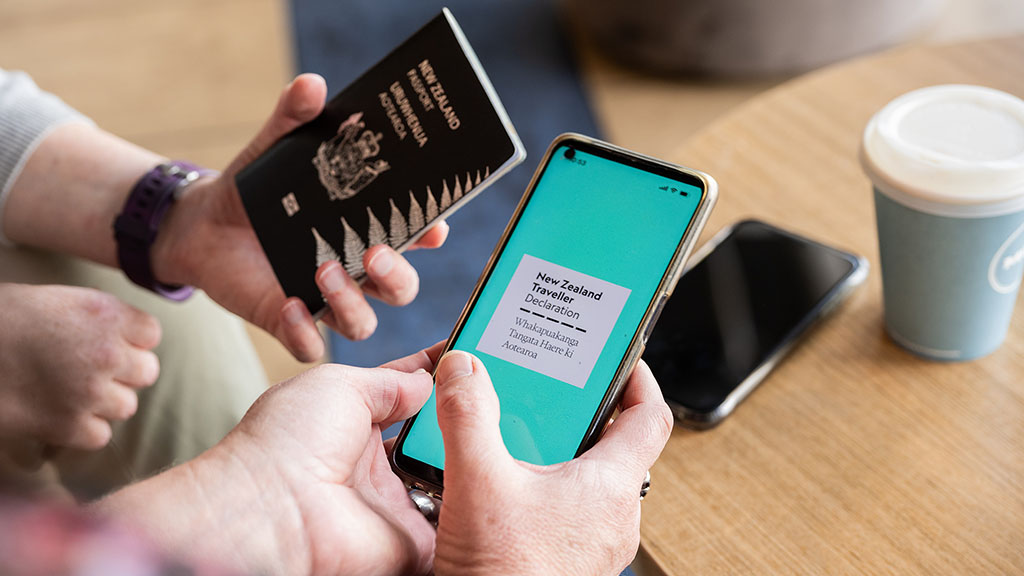
Travelling into New Zealand? Unsure if an item you're carrying is allowed? Declare it on your New Zealand Traveller Declaration.

Items you can't take out of New Zealand
Some items can't be taken out of New Zealand without permission. This includes natural pounamu (greenstone), paua meat, and certain plants and animals.